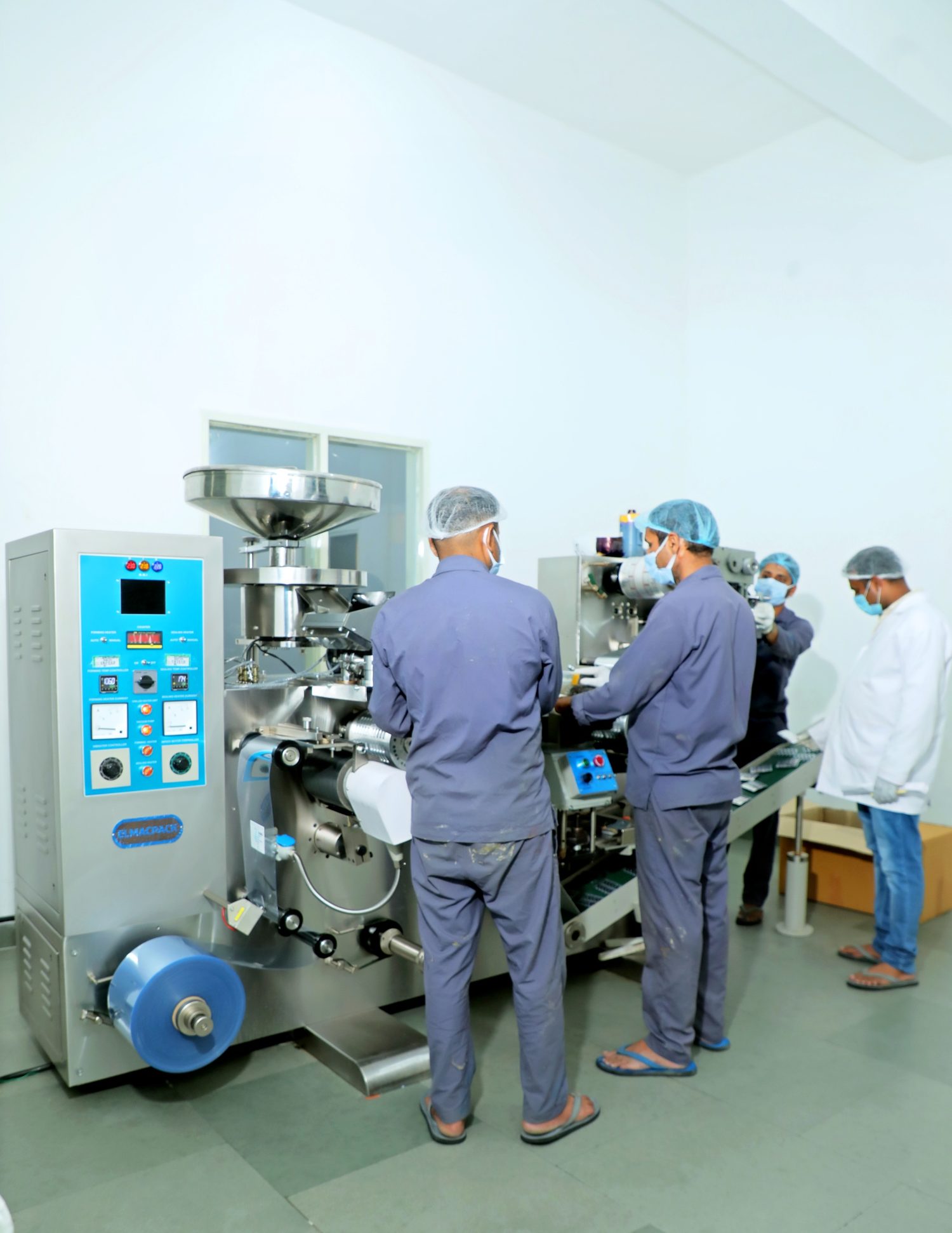
Elmach EPI 2000 blister packing machine at Admetus Lifesciences — Vitamin D3 softgel stability and packaging case study
All Case StudiesCase 01 · Formulation

VITAMIN D3 60K IU
STABILITY CHALLENGE

A 6-Week Resolution

NoteThis is an illustrative case reflecting Admetus Lifesciences' capabilities, processes, and quality protocols applied to a representative scenario. Client details and proprietary specifics are not disclosed.

+12 mo
Stability Extended
6 wks
Time to Resolution
100%
Potency Maintained
0
Batches Recalled

Context: A High-Dose Vitamin D3 SKU Approaching Re-Launch

An Indian nutraceutical brand owner approached Admetus Lifesciences with a Vitamin D3 60,000 IU softgel SKU that had been performing well in domestic pharmacy chains for two years. As they prepared for a regional expansion, their internal QC team flagged a stability concern: accelerated testing data suggested potency might drop below 95% labeled assay around the 21-month mark — three months short of the 24-month shelf life printed on the label.

The brand owner had three immediate choices: shorten the labeled shelf life (commercially unattractive), reformulate from scratch (12+ months, regulatory re-submission), or partner with a manufacturer who could identify the specific stability driver and resolve it within their next production cycle.

They contacted Admetus on a Monday. The first sample shipped in week 6.

Diagnosis: The Three Stability Drivers

Vitamin D3 (Cholecalciferol) is sensitive to three environmental factors: oxygen, light, and humidity. In high-dose 60,000 IU softgel formulations, even small exposure to any of the three can degrade potency over the shelf life window. Our quality team began with a structured diagnostic across three dimensions:

  1. Active ingredient sourcing.We cross-referenced the brand's incoming Vitamin D3 raw material COA against typical specifications. The active was within spec but on the lower end of the acceptable potency range — meaning the formulation had less "headroom" against degradation.
  2. Encapsulation conditions. Our ARBES SGX-806P encapsulation line operates under controlled humidity and oxygen exposure parameters. We verified the brand's prior batches had been produced on similar equipment but with slightly higher ambient humidity during the drying phase.
  3. Packaging permeability. The original blister format used standard PVC backing. PVC has higher oxygen and moisture transmission rates than PVDC-coated PVC or aluminum cold-form blister formats. For a fat-soluble, oxygen-sensitive active like Vitamin D3, packaging selection materially affects shelf life.

The Approach: Three Coordinated Changes

Rather than reformulate from scratch, we proposed three targeted interventions, all executable within a 4-week production cycle:

Change 1 — Active assay overage. Increased Vitamin D3 active loading from 100% labeled assay to 105% labeled assay (a standard pharmaceutical practice for actives with known degradation profiles). This provides headroom against the expected stability decline.

Change 2 — Drying condition tightening. On the Admetus production line, we reduced ambient humidity during the post-encapsulation drying phase by 15% relative to the brand's prior process. This reduces the moisture content trapped within the softgel shell.

Change 3 — Blister format upgrade. Switched from PVC blister to PVDC-coated PVC blister on the Elmach EPI 2000 line. PVDC coating reduces oxygen transmission by approximately 70% and moisture transmission by 80% compared to standard PVC. The visual appearance to end users is unchanged.

Validation: Accelerated Stability Re-Testing

In parallel with production, we initiated a 4-week accelerated stability study on a pilot batch. The study followed ICH Q1A(R2) guidelines: samples held at 40°C / 75% relative humidity for 4 weeks, with potency assays at week 0, week 2, and week 4. The 4-week accelerated condition approximates 12 months of real-time storage.

Results: at week 4 (equivalent to ~12 months real-time), Vitamin D3 potency held at 102% labeled assay — well within the 95–105% specification window. Extrapolation to 24 months projected potency at ~98% labeled assay, comfortably within spec.

Real-time stability data will continue accruing across the next 24 months. The brand owner now has both accelerated and ongoing real-time data supporting the 24-month shelf life claim.

Outcome

Six weeks from the brand owner's first call, the first re-formulated pilot batch shipped from our Jind, Haryana facility. The brand successfully launched their regional expansion on the original timeline. Subsequent production batches have all met the tightened stability profile.

More importantly, the brand owner now has a documented stability dossier they can present to international regulators as their export ambitions expand — turning what began as a near-term commercial problem into long-term documentation that supports market growth.

Key Capabilities Demonstrated
  • · ICH Q1A(R2)-compliant accelerated stability testing
  • · ARBES SGX-806P precision encapsulation with controlled humidity
  • · Elmach EPI 2000 blister packing across multiple substrate types (PVC, PVDC, aluminum)
  • · In-house QC laboratory for potency assays
  • · 4-week pilot-to-production turnaround on existing formulations

FACING A SIMILAR CHALLENGE?

Whether you're troubleshooting an existing softgel SKU, validating a new formulation, or preparing for international expansion — we can help. Detailed quotation within 48 hours.